I saw Diana left in tears by Queen – but I’ll never forget my own furious row

SHE would have been 65 on Wednesday.
I have spent more than 35 years on the royal beat. Crossed paths with queens, kings, prime ministers, presidents, the odd dictator. Never met anyone like Diana, and never expect to.


Begin with the laugh, because the films always miss it. She was funny. Risqué, when the mood took her, and gloriously she loved a joke that ran near the knuckle.
She was once called up to Harry’s school after he had told one of her naughty jokes, but she burst out laughing at the head’s rebuke. Luckily Harry got the punchline wrong.
We were sold the sad princess, the tortured soul. But the Diana I stood near, season after season, was usually laughing her head off.
She sold newspapers like no one before her and no one since. A single photograph cleared the Fleet Street front pages.
She knew the strength of that to the last decimal, and used it, and never once looked as though she was trying.
Her 30th birthday told you everything.
The Savoy, the summer of 1991, my first day on the job, a rookie on this paper. That morning Nigel Dempster had splashed the death of her marriage across a black-bordered page — “A cause for concern” it read.
A lesser woman cancels and hides. Diana swept in, Phil Collins on the stage singing Another Day In Paradise.
She did not let it show. She fixed a smile, put the room at ease, and the guests were transfixed.
She could do it to anyone. I saw her take the hand of tyrant Robert Mugabe, the president of Zimbabwe, and watch him melt where he stood.
In the US she had Henry Kissinger, the former US Secretary of State, giggling over the starter.
No matter what a man had done or how hard he thought himself, she arrived, and he gave way. And she spent it on the people the rest of us had crossed off.


Her courage is the part we forget. The late Queen once asked her, kindly, whether she might put her passion behind something nicer. Something less difficult than dying men.
Diana was in tears afterwards. She could have taken the easy route but she was determined to carry on with her Aids work, because it mattered, and because almost nobody else of any standing would.
That was the steel beneath the smile, and the whole point of her.
In 1987 the UK was terrified of Aids. Grown men swore you could catch it from a cup or a handshake.
Diana sat on a dying patient’s bed at the Middlesex Hospital and took his bare hand, no glove, no barrier, in full view of the photographers.
That one frame did the work of 100 government leaflets. It told the country these men could be touched. The dread lifted in an afternoon.
She sought out the cases nobody wanted over their cornflakes. Nepal, for the Leprosy Mission. India, where she sat in a schoolroom with the children rather than cut a ribbon.
In Zimbabwe she fed a line of people who had walked half a day to reach her. She rewrote the grammar of a royal visit as she went, and not a flicker of it was performance.
When out of the firm in Angola one image endured. January 1997, a visor and a flak jacket, a slow walk through a live minefield. By Christmas the world had moved to ban the wretched things. Back home, a junior defence minister called her a loose cannon, ill-informed, meddling in politics. Diana gave him short shrift. “I am a humanitarian,” she said. She always was. She saw the whole picture while Westminster counted votes, and did not mind being thought naive for it. The work she loved best carried no cameras.
She took her sons, small boys then, into shelters and hospices, and made William and Harry shake hands and learn names.
The Passage, Centrepoint, the cancer wards. It was an education, and it stuck. She was no saint, and would have laughed anyone out of the room who tried to crown her one.
We did not always get along. I once wrote, from a top-level briefing, that she was a thorn in the side of the Queen.


She did not forget it. In Sydney, in the early Nineties, she found me at a reception and told me flatly I had got it wrong. A Foreign Office briefing is a Foreign Office briefing, ma’am, I said.
She turned on her heel and swept off, furious, and I sat there waiting to be sacked. The next morning one of her staff rang to check there were no hard feelings.
She could fight you and forgive you inside a day. Wilful, wounded, exhausting and profoundly kind, she understood better than anyone how to lay her fame at the feet of people with no voice.
She had taught the monarchy to feel. She crouched to a child’s level, held strangers, let us see her cry.
You saw the size of it the week she died. The stiff upper lip of a whole nation simply went.
Grown men who had never met her wept on the pavements. The flowers outside Kensington Palace rose into a sea, feet deep and stretching for acres. Tony Blair christened her the People’s Princess and demanded the flag fly at half-mast over the Palace. In the end it flew.
The most unbending family on Earth bowed to ordinary grief, and you could feel the whole country changing.
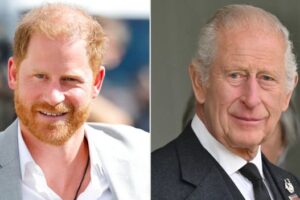
Her boys carry the load now.
William took his mother’s patronage of Centrepoint and made the end of homelessness his life’s work, his Homewards project is those childhood visits grown to manhood.
Harry, whatever has gone sour since, has the same wiring.
He sat for a live HIV test to break the old stigma, exactly as she would have.
In 2019 he walked the same Angolan ground his mother had, a street of shops and schoolchildren where the mines once lay.

So where would she be at 65? Out in the world, without question.
The planet is desperately short of people who can walk into any room and be believed, and she was the best of them.
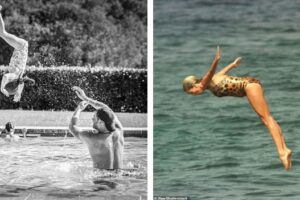
She had first met Grace of Monaco in March 1981, at a London gala, her first engagement as Charles’ fiancée.
She was 19, frightened, and fled to the ladies’ in tears. Grace took her face in both hands. Don’t worry, dear, she said. It will only get worse. Both women would die the same way, too soon, in a car, 15 years apart. Diana would have outgrown that shadow and become the stateswoman Grace never lived to be, at the head of a serious foundation
She would have walked back into that minefield before she cashed herself in.
A grandmother, too, gloriously. Doting, a shade wicked with it, worshipped by George, Charlotte and Louis and worshipping back.
She might well have found love again, and I hope she did.
Warm, far from old, perfectly capable of a second family had she wanted one.


She would have ached over the gulf between her sons, knocked their heads together, then gathered them both up and refused to let go.
A reunited William and Harry would have been the finest thing she left behind.
For nearly 30 years, we have argued about how she died. The tunnel in Paris.
It has all but buried the only thing that should have outlasted her, which is how she lived.
She did every bit of it — the wards and the minefields and the shelters — while her own marriage and her own heart were quietly coming apart.
She gave most when she had least left to give. She died at 36.
We never saw her grow old, so she stays fixed there in the mind.
I am certain she would have worn her sixties superbly, and put every year of them to work.
She once said she longed to be the queen of people’s hearts.
She managed it. She holds the title yet.
Light a candle on Wednesday.
She would have been 65, 29 years gone, and somehow not gone at all.