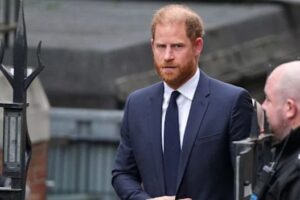
Prince Harry has spent years positioning himself as one of the British Royal Family’s fiercest critics of the tabloid press, launching a series of high-profile legal battles that he argued were about accountability rather than money. But after suffering one of the biggest courtroom defeats of his campaign, the Duke of Sussex now faces an entirely different battle—one that could cost millions of pounds.
The latest developments come only weeks after London’s High Court dismissed every claim brought by Prince Harry and six fellow claimants against Associated Newspapers Limited (ANL), the publisher of the Daily Mail and Mail on Sunday. The lawsuit alleged widespread unlawful information gathering, including phone hacking and other privacy violations, but the court ruled that the allegations had not been proven.
Now, the financial consequences are beginning to unfold.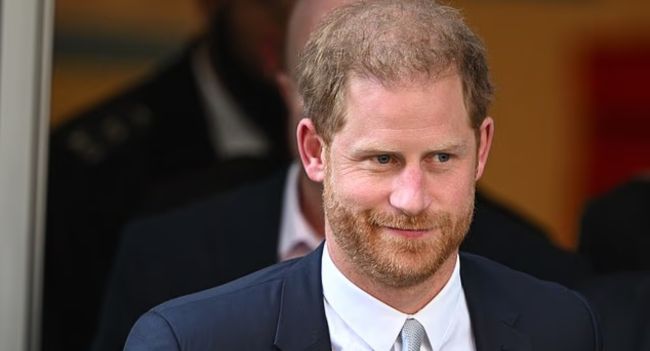
Lawyers representing ANL have asked the court to order Prince Harry and the other claimants to make a substantial interim payment toward the publisher’s legal costs while the final bill is determined. According to court filings, ANL’s legal expenses have climbed to approximately £34.5 million, with the publisher seeking an initial payment of around £10 million as the legal fight over costs continues.
The figures have transformed what was already a headline-making defeat into an even more dramatic legal showdown.
ANL’s legal team argued that the case was pursued in a manner that justified an enhanced costs order, claiming the litigation placed extraordinary demands on the publisher while relying on allegations the court ultimately rejected. The publisher is seeking costs on an indemnity basis—a legal standard that, if granted, could significantly increase the amount recoverable from the claimants.
Prince Harry’s legal team strongly disputes that request.
They argue that the publisher’s costs are excessive and that such an order would be disproportionate. While acknowledging the defeat, Harry’s lawyers maintain the claim was brought in good faith and have proposed a lower interim payment while the dispute over legal costs is resolved.
Behind the courtroom arguments lies an even larger question.
For years, Prince Harry has described his legal campaign against sections of the British media as a deeply personal mission, linking it to the treatment of his late mother, Princess Diana, and insisting that exposing unlawful press practices was a matter of principle. The loss against ANL therefore represents more than a financial setback—it challenges one of the central pillars of his public crusade against Britain’s tabloid culture.
Despite the ruling, Harry has shown little sign of retreat.
Following the judgment, he publicly criticized the outcome, arguing that the decision failed to deliver meaningful accountability. ANL, meanwhile, celebrated the verdict as a complete vindication of its journalism and a significant victory for press freedom, underscoring just how dramatically the two sides continue to disagree over the case’s significance.
The final amount Prince Harry and the other claimants may ultimately be ordered to pay has not yet been determined, and the court must still decide the outstanding costs issues. But one thing is already clear: the legal battle that Harry hoped would expose wrongdoing has instead entered a costly new phase where the financial consequences may become almost as closely watched as the original claims themselves.
For a prince who has repeatedly declared that this fight was never about personal gain, the next ruling may reveal whether the greatest price of his campaign was never the courtroom defeat itself—but the extraordinary cost that followed once the verdict had already been delivered.