A grieving mother has delivered a harrowing warning about the cultural impact of Euphoria, claiming the hit HBO series mirrors the devastating reality that led to her 21-year-old daughter’s fatal overdose—an experience she says continues to haunt her every time the show returns to screen. 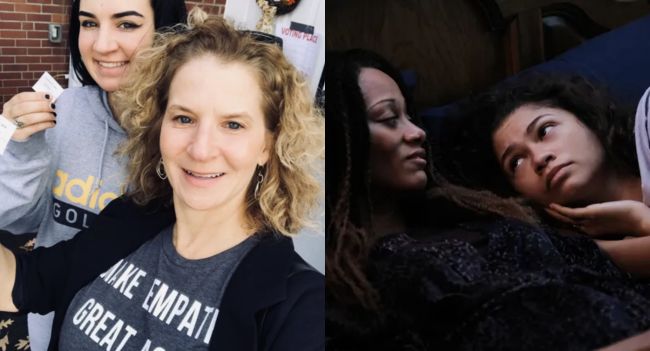
According to her account, what begins in Euphoria as stylized storytelling about teenage rebellion and experimentation closely resembles the early stages of real addiction—subtle, almost invisible shifts that escalate into something uncontrollable. The mother describes watching her daughter transition from a seemingly manageable phase of drug use into a life-threatening dependency, a progression she believes is dangerously easy to underestimate.
Her criticism centers on what she perceives as a blurred line between depiction and glorification. While Euphoria has been widely praised for its raw portrayal of substance abuse, mental health struggles, and teenage trauma, she argues that certain elements risk normalizing behaviors that, in reality, often end in irreversible loss. Experts have noted that the show reflects the “chaos” of addiction, particularly through characters like Rue Bennett, whose storyline captures the destructive cycle of drug dependence and its impact on family relationships.
The mother’s story underscores that chaos in stark terms. She recalls the emotional toll of living with an addict—the unpredictability, the fear, and ultimately, the helplessness as her daughter’s condition worsened. What viewers may interpret as dramatic storytelling, she insists, mirrors real-life experiences that unfold far from the camera, often without intervention or resolution.
Her loss also reflects a broader crisis. Drug overdoses, particularly involving opioids and synthetic substances, have surged in recent years, becoming a leading cause of death among young people. The portrayal of these substances in media, she suggests, must be handled with extreme care, given how easily perception can influence behavior.
Despite the controversy, Euphoria remains a cultural phenomenon, sparking ongoing debate about its role in shaping public understanding of addiction. Created by Sam Levinson—who has drawn from his own experiences with substance abuse—the series positions itself as a raw, unfiltered look at modern youth.
Yet for this mother, the discussion is not theoretical. It is deeply personal. Each episode, she says, feels less like fiction and more like a painful reconstruction of events she lived through—moments she cannot change, and warnings she hopes others will not ignore.
Her message is direct and unsettling: behind every storyline of addiction lies a reality far darker than what appears on screen—and for some families, the ending does not fade to black, but lingers long after the credits roll.