What once looked like simple slapstick comedy is now being rediscovered as something far more complex—an almost unrepeatable chemistry between performers who understood exactly how far they could push a moment before it collapsed.
At the center of it all were Tim Conway and Harvey Korman, whose work on The Carol Burnett Show continues to circulate decades after its original broadcast. But what modern audiences are noticing isn’t just the humor—it’s the connection.
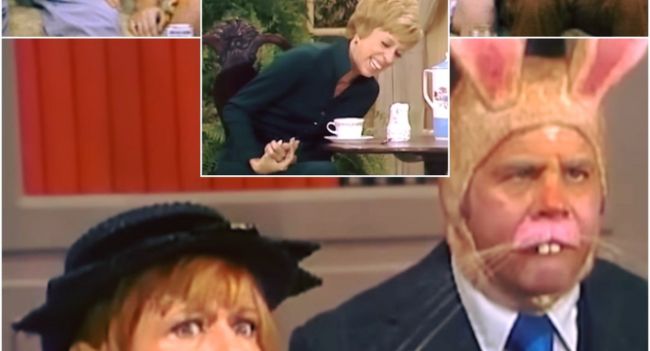
Conway, known for his mastery of physical comedy and improvisation, built a reputation on doing one thing exceptionally well: making his co-stars break. Rather than sticking rigidly to scripts, he would introduce subtle pauses, unexpected gestures, or entirely new lines mid-performance—forcing genuine reactions from those around him.
Korman, by contrast, played the essential counterweight. As the “straight man,” his role was not to outshine, but to react—creating the tension that made Conway’s chaos land. Their dynamic became a finely tuned system: one pushing boundaries, the other trying to contain them, often unsuccessfully.
What made their partnership remarkable was how often those moments were real. When Korman broke into laughter on camera, it wasn’t acting—it was a loss of control that producers chose to keep in the final cut. Over time, these unscripted breakdowns became a defining feature of the show itself.
In sketches like “The Dentist” or “The Oldest Man,” the humor didn’t just come from the premise, but from watching the scene slowly unravel. Conway would stretch timing to absurd lengths or introduce unexpected physical bits, while Korman visibly struggled to stay in character—turning the act of “failing to perform” into the performance itself.
Today, as these clips resurface across social media, audiences are beginning to view them differently. What once seemed like vintage comedy now reads as something more organic—a form of entertainment built on trust, risk, and real-time reaction rather than precision alone.
It is this unpredictability that many argue television has largely lost.
Modern productions, often tightly edited and carefully controlled, rarely allow space for that kind of spontaneity. But on The Carol Burnett Show, the willingness to let a scene fall apart was exactly what made it unforgettable.
And in the interplay between Conway and Korman, viewers weren’t just watching comedy—they were witnessing a rare kind of creative instinct:
Two performers, completely in sync… even when everything appeared to be falling apart.