A newly released Netflix documentary has reignited intense public scrutiny around Mackenzie Shirilla, not because of what she said in her first on-camera interview from prison—but because of how her behaviour appeared to shift while she was saying it.
The series, which revisits the 2022 crash that killed two people, includes previously unseen interview footage that has become the subject of widespread discussion among viewers, legal commentators, and true-crime analysts. While Shirilla maintains that she has no recollection of the moments leading up to the collision, attention has increasingly focused on her demeanour during questioning rather than the content of her statements alone.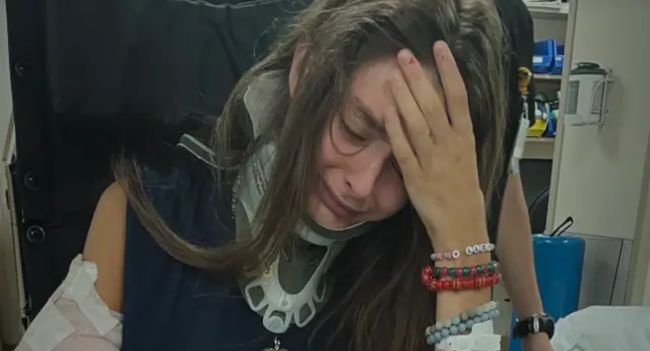
According to the filmmakers involved, securing the interview was described as highly controlled and heavily restricted, with legal supervision present throughout. The setting itself has become part of the analysis, as observers argue that the conditions under which statements are made can significantly influence how behaviour is interpreted on camera.
What has drawn particular attention is a moment in the footage where Shirilla appears to pause and seek reassurance from someone off-camera—widely reported to be her legal representative—before continuing her response. That brief interaction has since been dissected online, with some viewers suggesting it reflects uncertainty about how her words might be perceived, while others argue it is a routine and entirely expected exchange given the legal context of the interview.
Legal experts commenting on similar high-profile cases have noted that interviews conducted during active appeals processes often involve careful wording, repeated clarifications, and real-time legal awareness, especially when previous testimony and court findings already exist on record.
However, the debate surrounding the footage has gone beyond legal procedure and entered broader questions of perception.
Some commentators argue that viewers tend to interpret micro-expressions, pauses, and shifts in tone as meaningful indicators of intent or emotion, even when those interpretations are not supported by forensic or legal standards. Others insist that such behavioural cues can still offer insight into psychological state, particularly in cases where intent is a central issue.
Adding to the discussion is renewed attention on the broader body of evidence presented during Shirilla’s trial, including digital records, crash data, and testimony that prosecutors used to argue intent, while the defence pointed to medical explanations and lack of memory.
The documentary itself does not introduce new legal findings, but its presentation of previously recorded material has led to fresh debate over how much weight should be placed on post-incident interviews compared to technical evidence from the crash investigation.
And yet, amid all the analysis of words, expressions, and reactions, one small detail from the interview has taken on outsized significance among online observers.
According to one commentator familiar with documentary production processes, the most overlooked aspect may not be what Shirilla said at all—but the repeated visual cue of her checking for approval before continuing certain answers, something they claim subtly shaped how viewers interpret the entire interview sequence.
If that reading is accurate, it raises a broader question that extends beyond this single case.
Whether audiences are reacting to evidence—or to the carefully constructed conditions under which that evidence is presented.
And that distinction, as the documentary quietly suggests, may be where the real debate has always been hiding.