A familiar setup on The Carol Burnett Show—a pilot addressing a nervous passenger mid-flight—should have been simple. The beats were clear, the tension easy to control, and the comedy designed to land exactly where expected.
Then Tim Conway stepped in. 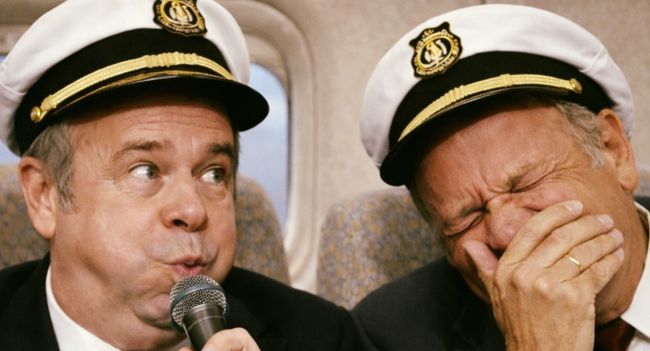
In the airline-themed sketch, Harvey Korman plays the anxious passenger, relying on structure and timing to carry the scene. Conway, cast in a position of authority, begins within those same boundaries—but only briefly. What follows is a gradual shift away from the script into something far less predictable.
Instead of delivering straightforward information, Conway introduces absurd detours—irrelevant details, misplaced logic, and perfectly timed pauses that destabilize the rhythm of the scene. Each line feels slightly “off,” just enough to force Korman into a constant state of recovery.
That dynamic was no accident.
Conway had built a reputation for doing exactly this—waiting until the moment everything felt secure, then inserting a single unexpected element that changed the trajectory of the entire sketch.
Korman, trained to maintain composure, becomes the focal point of the unraveling. His reactions—hesitation, visible confusion, and eventual laughter—transform the scene from scripted comedy into something closer to live improvisation. The tension no longer comes from the premise, but from watching how long he can hold on.
He can’t.
As the exchange escalates, Conway continues to layer unpredictability, pushing the moment further from its original structure. The result is a controlled breakdown—one performer quietly dismantling the scene, the other struggling to keep it intact.
This pattern defined much of their work together.
Across multiple sketches, Conway’s style relied on disruption rather than escalation, while Korman’s discipline made the collapse visible—and therefore funnier.
Today, as clips of these performances resurface, audiences are recognizing something that wasn’t always obvious at the time. What looked like simple comedy was, in fact, a delicate balance of timing, trust, and risk.
Because the real humor wasn’t just in the lines.
It was in the moment the script stopped mattering—and neither performer could fully control what happened next.