For years, fans of Stranger Things have debated one question above all others: who truly defeats Vecna in the end? Is it Eleven, the face of the show’s supernatural power, or someone else entirely? According to Matt Duffer, the answer was never as simple as choosing a single hero — and the truth reveals a far more deliberate, emotionally charged design behind the series’ conclusion.
In a recent explanation of the creative team’s thinking, Matt Duffer confirmed that from the very beginning of planning the final confrontation, one decision was never in doubt: Will Byers would be essential. Not optional. Not symbolic. Essential.
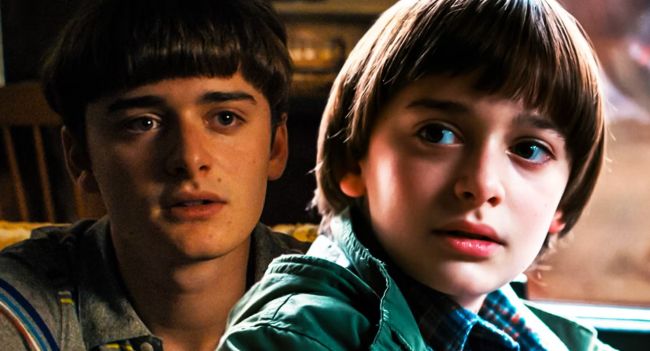
“The only real question,” Duffer explained, “was who delivers the final blow — Will or Eleven.”
That uncertainty lingered deep into the writing process, but the resolution ultimately came through balance rather than replacement. Eleven would still confront Vecna with raw power. But Will would be the one who makes that victory possible.
According to Duffer, the final battle was structured as a collaboration, not a takeover. Eleven is the force that drives Vecna into the fatal trap, slamming him into the spikes that end his reign of terror. Yet that moment only exists because Will has already dismantled him from within. Will weakens Vecna, tears through his defenses, and rips apart his left arm — creating the opening that allows Eleven to strike.
“Will is the one who creates the condition for Vecna’s defeat,” Duffer stated plainly. “Without Will, it couldn’t happen.”
This revelation reframes Will Byers’ entire arc across the series. From the boy who vanished in Season 1 to the one still psychically tethered to the Upside Down, Will was never just a victim of the supernatural. He was its counterweight. His connection to Vecna was not a lingering scar — it was a narrative weapon, slowly sharpened across five seasons.
The creative team emphasized that Will’s role was always meant to come full circle. Vecna may have haunted Will’s childhood, invaded his mind, and shaped his trauma, but that bond also granted Will a unique access to Vecna’s weaknesses. Where Eleven confronts evil from the outside, Will understands it from the inside. That duality is what made the final plan work.
Rather than positioning Will as a passive guide or emotional support, the Duffers deliberately elevated him into a decisive force. He does not merely assist. He destabilizes. He breaks Vecna down to a point where brute power can finally finish the job.
The choice carries thematic weight as well. Stranger Things has always been about connection — friendship, shared trauma, and collective resistance. Allowing a single character to defeat Vecna alone would have betrayed that foundation. By splitting the victory between Will and Eleven, the series reinforces its core message: survival is never solitary.
In the end, Vecna is not defeated by strength alone, nor by insight alone, but by the collision of both.
And perhaps most striking of all is Matt Duffer’s final clarification: Will was never a backup plan. He was never secondary. From the writers’ room to the final frame, Will Byers was always the missing piece — the quiet constant without whom the end of Stranger Things simply could not exist.