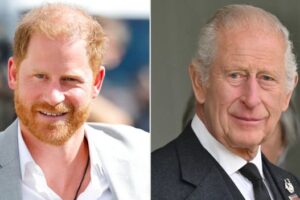
PRINCE HARRY highlighted the importance of “families being together” as he joined wounded war heroes in an emotional reunion with the medics who saved them.
And the Prince hailed the experts, volunteers and support workers who brought veterans back from the brink after they sustained horrific injuries on the front line.


While at Birmingham’s Queen Elizabeth Hospital, Harry also toured Fisher House — a home situated in the grounds — opened by his father, King Charles, in 2013 so that military families had somewhere to stay as their stricken loved ones recovered.
Reflecting on Thursday’s visit, which marked a year until the city hosts his Invictus Games, Harry exclusively told The Sun: “Places like Queen Elizabeth Hospital Birmingham and Fisher House remind us that recovery is never something anyone does alone.
“Behind every wounded, injured or sick service person is a network of extraordinary medical professionals, families, carers and charities who help carry them through the hardest days. The care provided here goes far beyond treating physical injuries.
“It’s about restoring confidence, rebuilding lives and making sure families can stay close when they are needed most.
“Fisher House plays a vital role in that journey, lifting some of the financial burden that comes with long periods of treatment so families can focus on what really matters — being together.”
Harry met several survivors of war, including Royal Engineers triple amputee Josh Boggi, 39, who lost both legs and an arm when he stepped on a crude Taliban bomb in Helmand Province in southern Afghanistan on New Year’s Eve 2010.
Josh strode into the military ward on bionic legs and embraced medic Lauren Odell — a squadron leader who was a junior nurse when he arrived fighting for life 15 years ago.
She stunned the brave warrior — who she had not seen for more than a decade — by revealing she had named her son Joshua in his honour.
Harry then joked that medics did such a good job of fixing Josh up, he had been well enough to re-injure himself in two more near-misses outside military life.
The war hero, who won a Sun Millie award in 2013 for overcoming adversity, was hurt skydiving over Mount Everest and nearly died in a Majorca cycling crash.
To Josh, Harry quipped: “Normally, when they fix people and send them out, they don’t expect to have to do it again.”
The Prince added to the military medics: “You can count yourself responsible for getting them so fit they want to go off and ski and do all these things. Perhaps you should tell them you don’t want to see them again when they leave!”
Hailing the comrades who saved him, Josh said: “Nothing that I have done would have been possible without what happened here. Thank you.”
The Prince, a former cavalry officer and Army Air Corps pilot, had invited The Sun — as the forces’ favourite newspaper — to join him in the city where so many soldiers have been saved.
He appeared relaxed despite a bruising week in which he lost a lawsuit against the Daily Mail.
And when he met a red-bearded medic at the hospital, he shook his hand and joked: “Gosh! It’s like looking in the mirror. You’re a handsome man.”


Married dad of two Dave Wiseman from the Invictus Games Foundation, who was shot in the chest in Afghanistan, said of Harry’s city visit: “Birmingham holds a special place for the Armed Forces community.
“I remember coming round and driving through Birmingham with the blue lights on. I was drifting in and out of consciousness. I remember being told, ‘You are alright mate, you are going to be looked after’.
“I remember being driven through Birmingham with the blue lights on, drifting in and out of consciousness. I was told, ‘You are alright mate, you are going to be looked after’.
“It was such a relief. It’s cheesy, but it feels like coming home.”
Dave also praised Kathleen Ryan — known as “Kath The Cake Lady” — who reckons she has baked and served some 2.5 million treats to boost morale on the military ward over the past 17 years.
When Harry met her at Fisher House, she put the Prince straight to work in the kitchen, slicing and dishing out cakes and tarts.
Meanwhile, former Royal Artillery Sergeant Dave Weaver, who was staying at Fisher House when Harry visited, told how staff and patients are like “family”.
Dave, who served 40 years in the Army, was accompanying his wife Kim as she recovered from a liver transplant.


She said: “Fisher House has been a godsend. When you walk through the door you get this feeling, it’s so tranquil.”
Harry also met Basra firebomb survivor Karl Hinett, 39, who was pictured leaping from a burning tank in 2005; ex-Scots Guardsman double amputee Dave Watson, 39; and former RAF corporal Stuart Robinson, 44.
Stuart lost both legs after an IED blast in Helmand in 2013. His family were among the first to benefit from Fisher House while he was receiving hospital treatment.
He said: “My wife and son stayed here and it meant a break for them from dealing with everything that was going on. And when I visited them, it was a break from the clinical environment.”
Gavin Saunders, an ex-lieutenant colonel injured in a 2013 helicopter accident, said: “This place is an absolute blessing. All my family have stayed here.”
The July 2027 Invictus Games will involve more than 550 wounded and sick service personnel from 25 countries.
Other events to promote it have included the unveiling of a train, Spirit of Invictus, on the London-Birmingham line.
Helen Helliwell, head of next year’s sporting extravaganza, said:
“Birmingham is its natural home.
“It is the city at the heart of the recovery journey.”