After nearly ten days orbiting deep space and circling the Moon, NASA’s Artemis II crew is now approaching the most perilous phase of their mission — a moment widely regarded by experts as the ultimate test of survival: re-entry into Earth’s atmosphere.
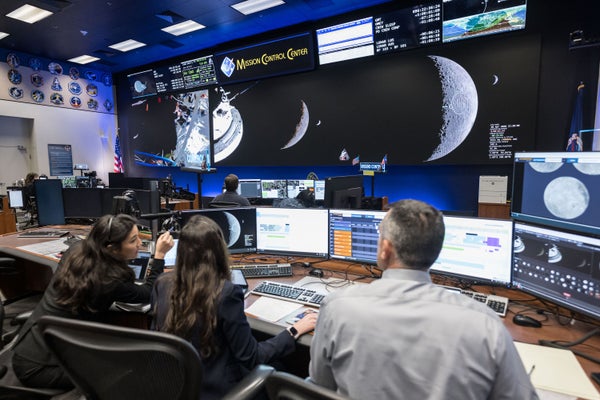
The spacecraft Orion, carrying four astronauts, is scheduled to splash down in the Pacific Ocean off the coast of California, marking the end of humanity’s first crewed journey around the Moon in more than half a century. But before they can return home safely, they must endure what many describe as a controlled fall through hell.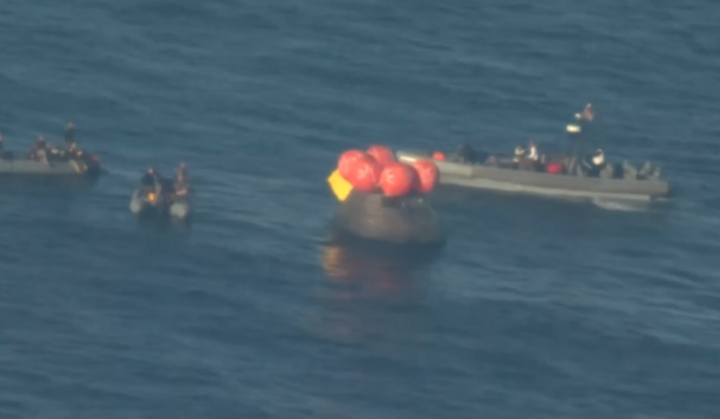
A RETURN TRIP THAT IS FAR MORE DANGEROUS THAN THE JOURNEY OUT
While the launch into space demands immense power and precision, it is the return that has long haunted engineers and astronauts alike. Re-entry exposes the spacecraft to extreme aerodynamic forces and searing heat as it slams into Earth’s atmosphere at speeds approaching 38,600 km/h.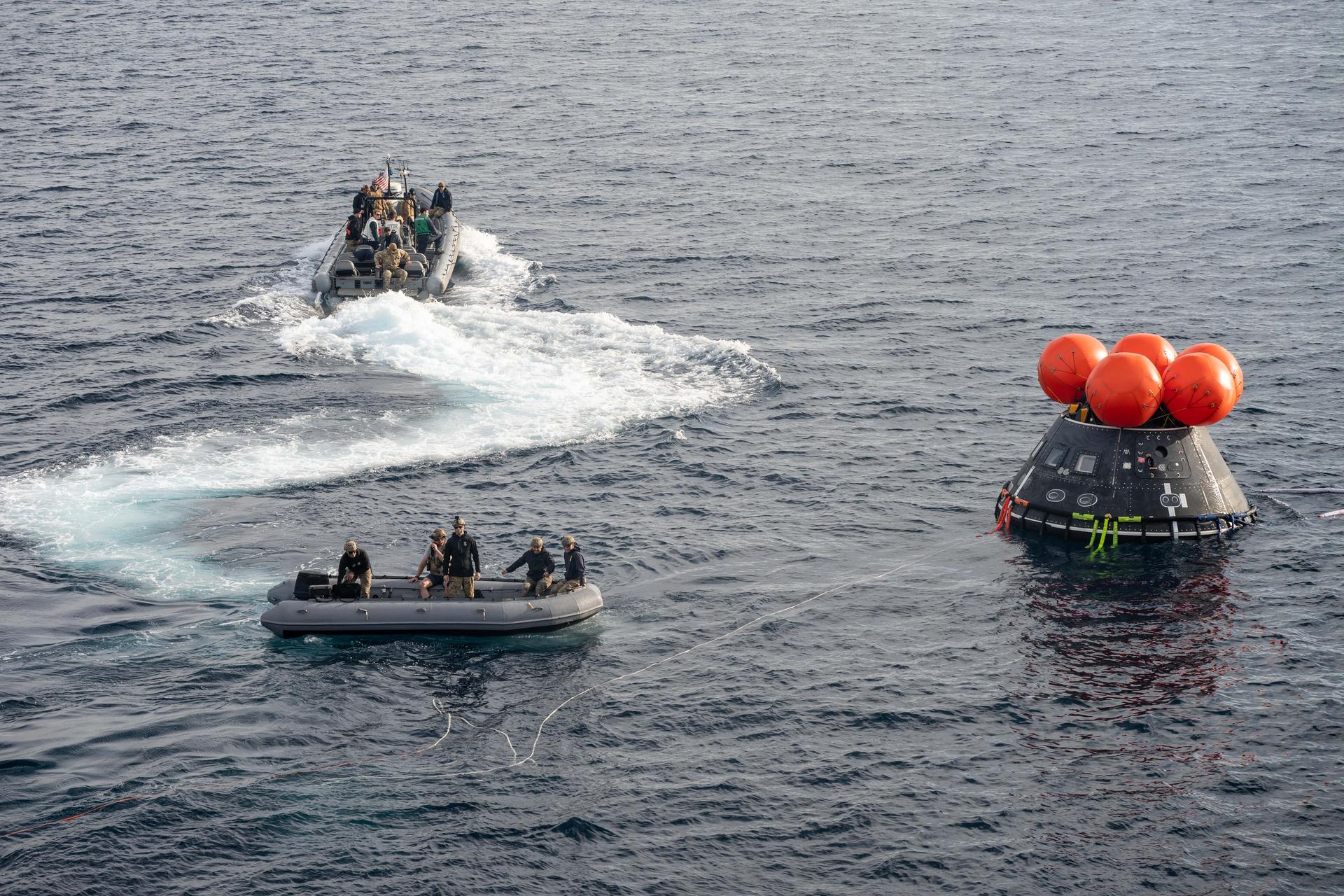
At that velocity, even a minor miscalculation could prove fatal. The Orion capsule must rely almost entirely on its heat shield — a critical protective layer designed to withstand temperatures hotter than molten lava — to prevent the crew from being incinerated.
Despite NASA’s assurances, concerns remain. The heat shield design used in Artemis II is closely based on the version flown during Artemis I, which previously raised technical questions. Engineers insist it is safe, but the margin for error remains razor-thin.
THE “EIGHT MINUTES OF TERROR” NO ONE CAN ESCAPE
As Orion begins its descent, the crew will experience what has been described as an “eight-minute gauntlet” — a period where friction with the atmosphere generates plasma that engulfs the spacecraft.
During this phase, communication with Earth can be partially or completely lost. Inside the capsule, astronauts must trust that every system performs flawlessly, even as temperatures spike and violent deceleration presses them into their seats.
It is a paradox of modern spaceflight: after surviving launch, deep space radiation, and the vacuum beyond Earth, the greatest threat still lies just minutes from home.
WHY COMING HOME MATTERS MORE THAN REACHING THE MOON
Veteran astronaut Victor Glover has emphasized that returning safely is the true measure of mission success. The data, images, and scientific outcomes of Artemis II only matter if the crew survives the journey back.
This perspective underscores a hard truth: space exploration is not defined by how far humans can travel, but by whether they can come back.
A HISTORIC MISSION BALANCING ON A FINAL TEST
Artemis II is more than a symbolic return to lunar exploration. It is a proving ground for future missions, including Artemis III, which aims to land humans on the Moon once again — potentially including the first woman and person of color to do so.
But all of that ambition hinges on a single, unforgiving sequence: re-entry.
Because in spaceflight, history is not made when rockets launch —
…it is decided in the final moments, when everything must go exactly right.