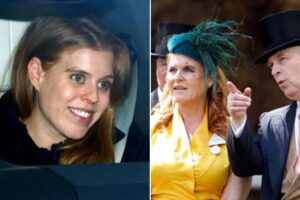
LONDON — On the surface, Princess Beatrice and Princess Eugenie have managed to maintain what appears to be a stable, if carefully managed, presence within the wider Royal Family. They continue to attend select family occasions, appear in group photographs, and maintain cordial relationships with senior royals including Prince William. But beneath the polished public appearances, royal insiders insist their position is far less secure than it looks.
The latest wave of scrutiny has been reignited following renewed discussion about the future structure of the monarchy — and who will be included once William eventually ascends the throne. While no official decisions have been announced, multiple commentators suggest the shift toward a “smaller royal core” could leave extended family members in an increasingly uncertain position.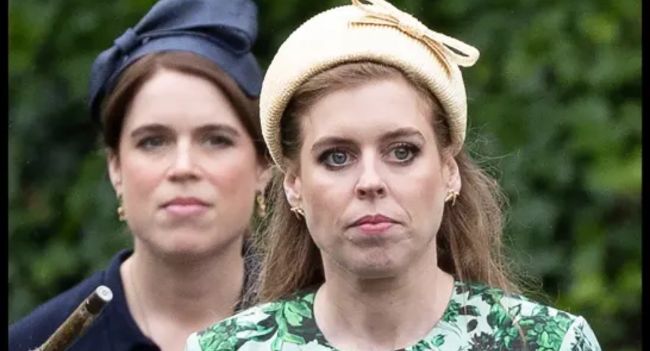
At the center of the debate are the daughters of Prince Andrew and Sarah Ferguson — Beatrice and Eugenie — who, despite their relatively low-profile public conduct, remain closely associated with a branch of the family that has long attracted controversy and reputational damage.
According to royal observers, the core issue is not their personal behavior, but perception. Even as both women maintain independent careers and families, critics argue that their royal titles and lingering proximity to York family controversies continue to create what insiders describe as an “unavoidable reputational overlap.” That overlap, some believe, becomes more significant as the monarchy prepares for a generational transition.
Adding to the tension are longstanding reports about financial arrangements and property privileges linked to non-working royals. While never formally framed as misconduct, such arrangements have repeatedly triggered debate about fairness, modernization, and whether extended royals should continue to benefit from institutional resources without performing official duties.
Within that context, Beatrice and Eugenie’s presence at recent high-profile family events — including a widely photographed wedding attended by senior royals — has fueled competing interpretations. To some observers, their inclusion signals continued acceptance within the family circle. To others, it represents something more temporary: a gesture of unity that does not necessarily translate into long-term institutional security.
One palace watcher described the situation as “a holding pattern disguised as normality,” suggesting that the real decisions about their future role may already be taking shape behind closed doors, even if they have not yet been communicated publicly.
What makes the situation more intriguing is the apparent contrast between private strategy and public behavior. On one hand, William is widely associated with plans for a more streamlined monarchy focused on a smaller group of senior working royals. On the other, he has continued to display visible warmth toward his cousins at public gatherings, creating a dual narrative that has left royal analysts divided.
Some interpret this as simple family loyalty. Others see it as something more calculated — a careful separation between personal relationships and institutional boundaries that have not yet been formally drawn.
But the most striking detail comes not from public appearances, but from what one unnamed insider reportedly described as a “quiet briefing note” circulating among palace aides. The contents have not been verified, and no official comment has been made, but the document is said to reference “future categorization of extended royal participation” — a phrase that has sparked speculation about internal planning far more advanced than previously assumed.
If such discussions are indeed taking place, it would suggest that the question surrounding Beatrice and Eugenie is no longer about acceptance or rejection in the present tense, but about timing — and how, or when, their role might be formally redefined.
For now, both princesses remain visible, present, and publicly welcomed at family occasions. But visibility inside the Royal Family has never been a guarantee of permanence.
And as one insider put it, in a remark that has not been independently confirmed but continues to circulate in royal circles, “The real decision isn’t whether they’re in or out… it’s whether they’ve already been quietly moved into a category the public hasn’t been told exists yet.”